The Connected Platform Behind a Stronger Therapy Practice
Your EMR, billing, and revenue insights—all connected from first referral to final payment.

Maria R.
38 years old
Post-op ACL repair
•
BCBS PPO
New Referral

Dorothy K.
81 years old
Home mobility & fall risk
•
Medicare Part B
New Referral

Walter B.
74 years old
Balance & gait training
•
Medicare Advantage
New Referral

Leo M.
5 years old
Speech & language delay
•
Medicaid
New Referral
Explore by stage
Stage 0
Before the first patient
Underwriting & Onboarding
Revenue readiness before go live.
We align your workflows, validate critical revenue cycle details, configure your StrataPT environment, and prepare your team for launch.
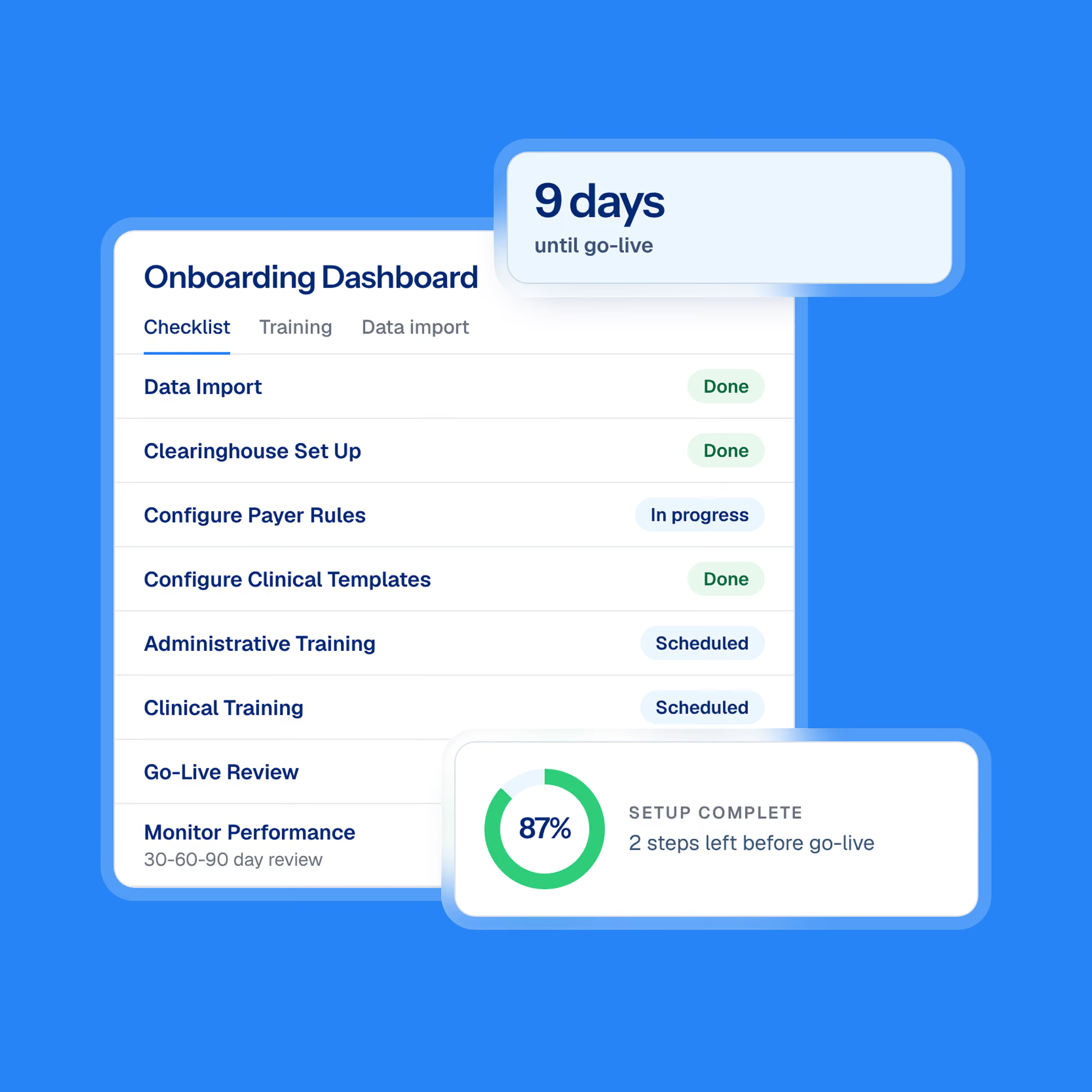
A shared onboarding plan keeps every task, owner, dependency, milestone, and next step visible from kickoff through Go Live.
We configure your StrataPT environment, workflows, providers, locations, payer requirements, contracts, billing rules, and clearinghouse connections around your practice.
We review credentialing readiness and validate migrated data and critical setup details to identify issues before they create downstream revenue leakage.
Role-based training and readiness checkpoints help prepare your team, workflows, and system for a confident launch.
The Outcome
A configured revenue operation, a prepared team, and a clear path to Go Live.
What this means for your practice
Validated setup and data help reduce downstream risk, errors, and rework.
Workflows, rules, and payer logic reflect how your practice actually operates.
Your people, our RCM Experts, and technology begin working from one coordinated revenue operation.
Your system, workflows, and team are prepared to operate confidently from Go Live.
Stage 1
First Patient Contact
Intake Management
Prevent revenue leakage before care begins.
Capture every referral, track progress, and keep the next step clear.
Capture referrals and new patient opportunities from fax, phone, portal, email, and other channels in one centralized workflow.
Configure intake statuses and workflows around how your practice operates, so your team knows what needs attention and what happens next.
Route new opportunities to the appropriate team member, location, or workflow for timely follow-up.
See patient details, insurance information, documentation, intake status, and outstanding requirements before the initial evaluation.
The Outcome
Every new patient opportunity is visible, organized, and moving toward care.
What this means for your practice
Keep every new patient opportunity visible from first contact forward.
Clear statuses and timely follow-up help more opportunities progress toward care.
Configure intake processes around how your practice actually operates.
Centralized capture, routing, and tracking reduce manual work and administrative friction.
Stage 2
Preparing for Care
Patient Intake & Engagement
Make it easier for patients to start care.
Simplify registration, capture accurate information, keep patients engaged, and collect what’s needed upfront.
Digital Patient Registration
Start care without the paperwork
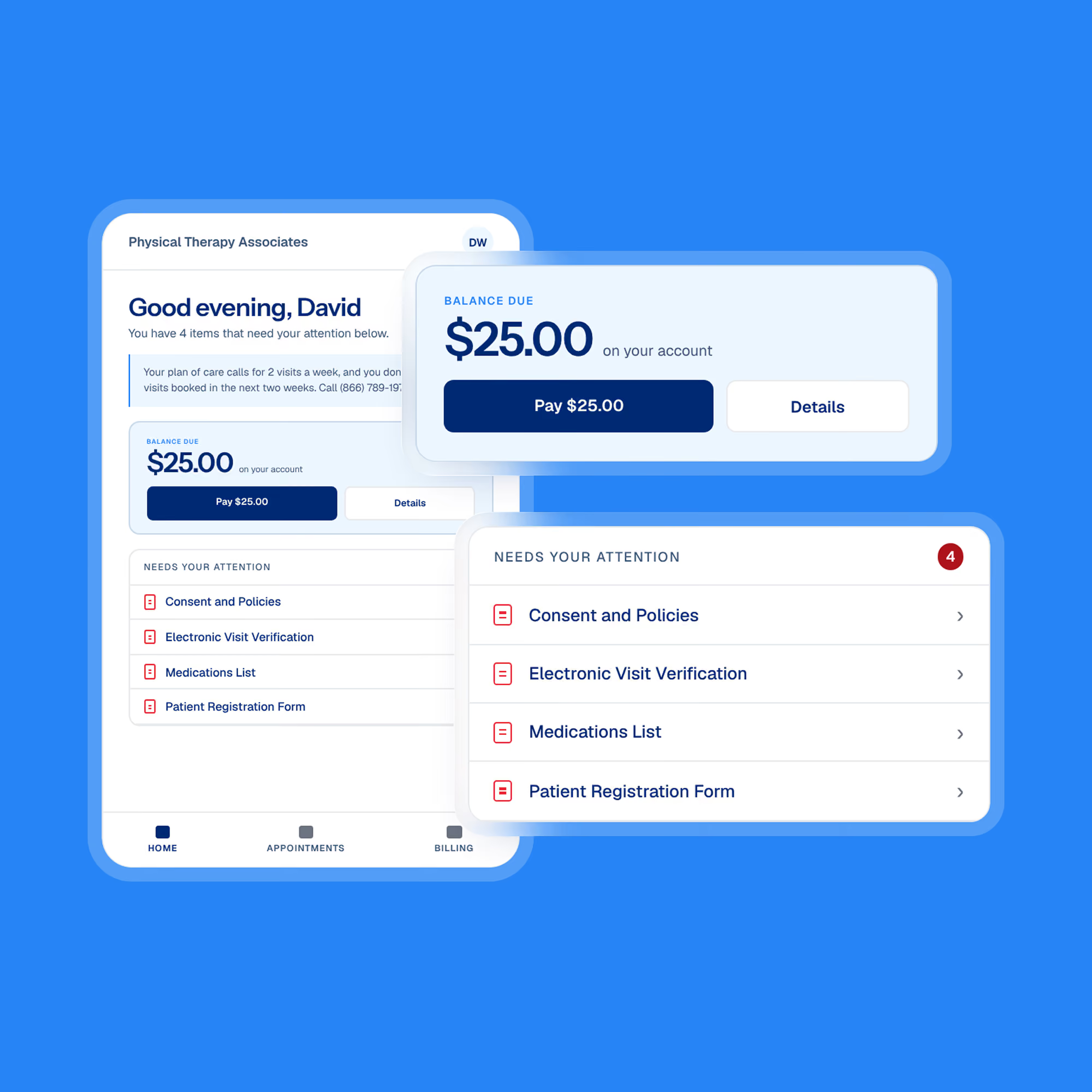
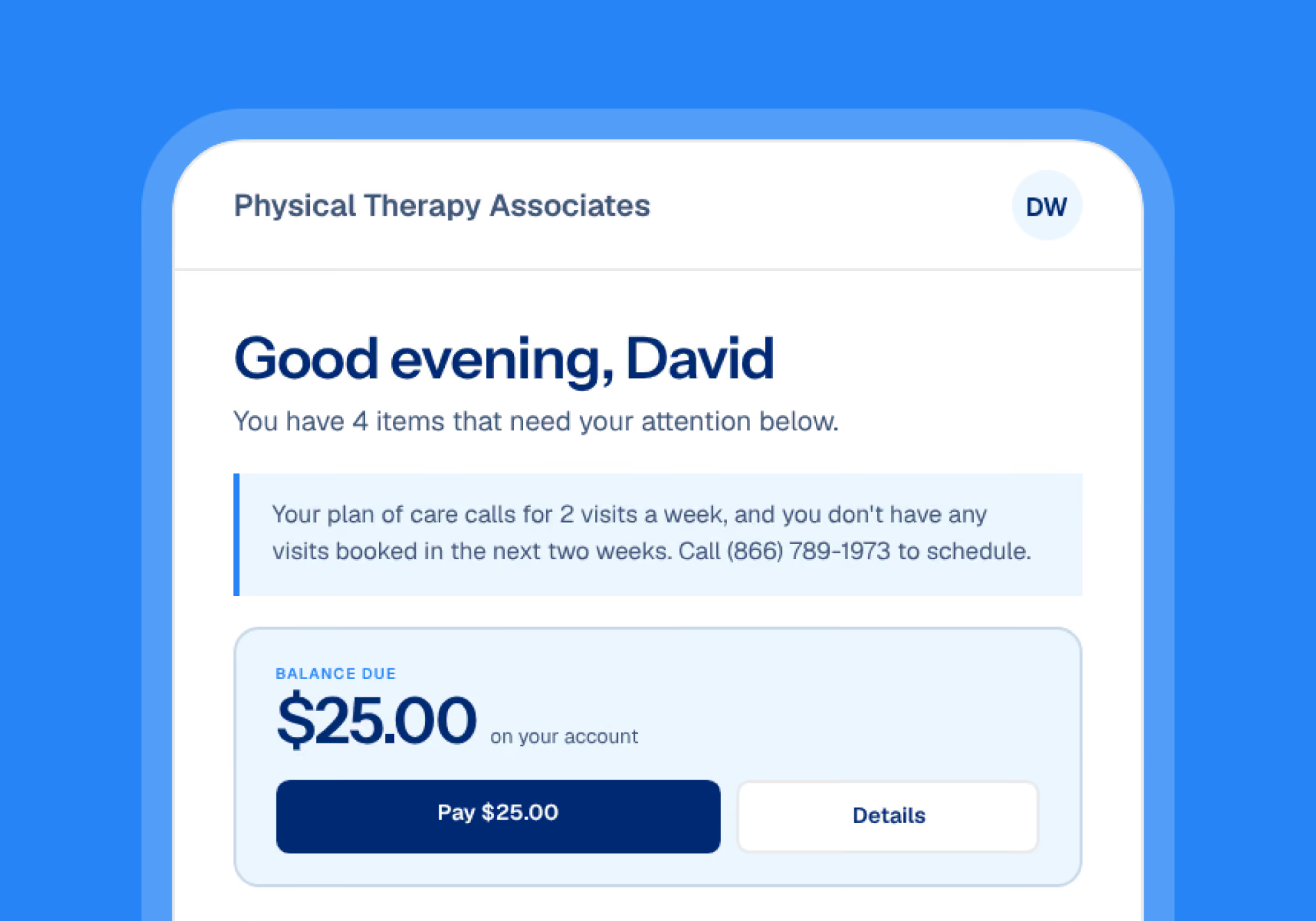
Patients complete registration online, with existing demographic and insurance information prefilled when available.
Digital Forms & Consents
Complete the essentials before arrival
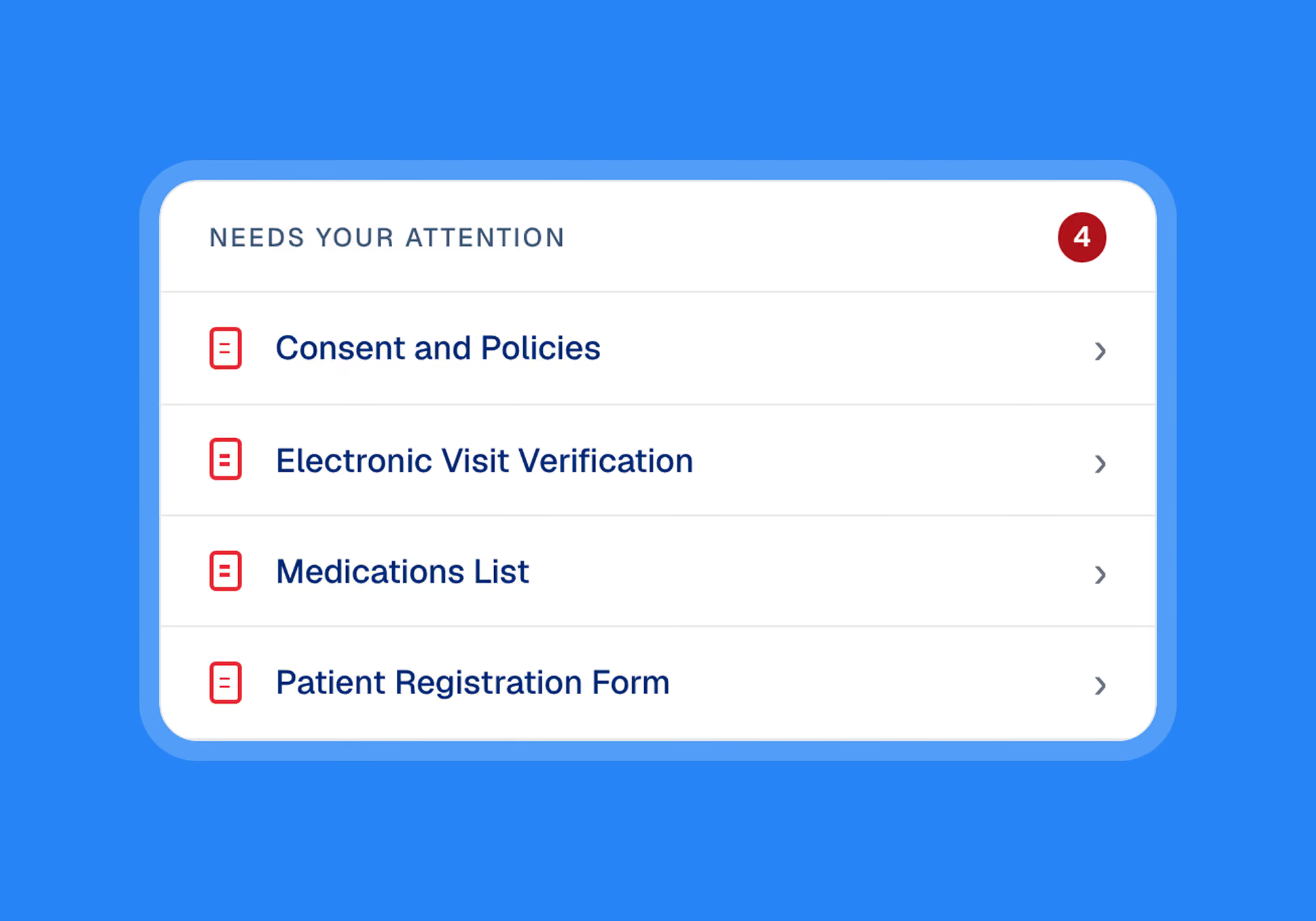
Patients review and sign forms, policies, and required documents securely within their patient record.
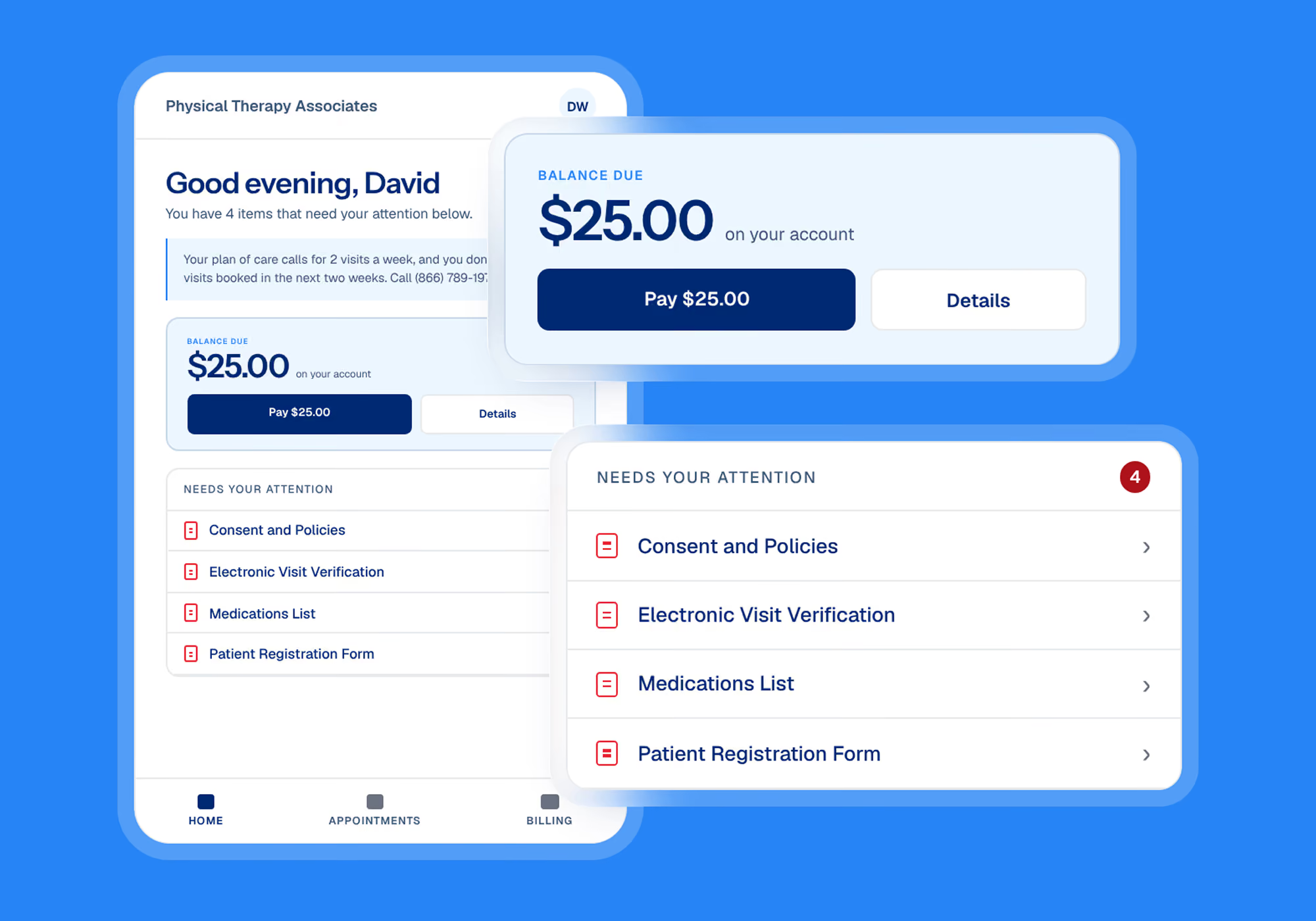
Automated Patient Communication
Keep patients informed and engaged
Automated reminders, two-way texting, and self-service tools help patients stay connected and prepared for care.

Upfront Patient Payments
Collect earlier. Reduce balances later.
Collect deposits and patient responsibility upfront to improve cash flow and reduce outstanding balances.
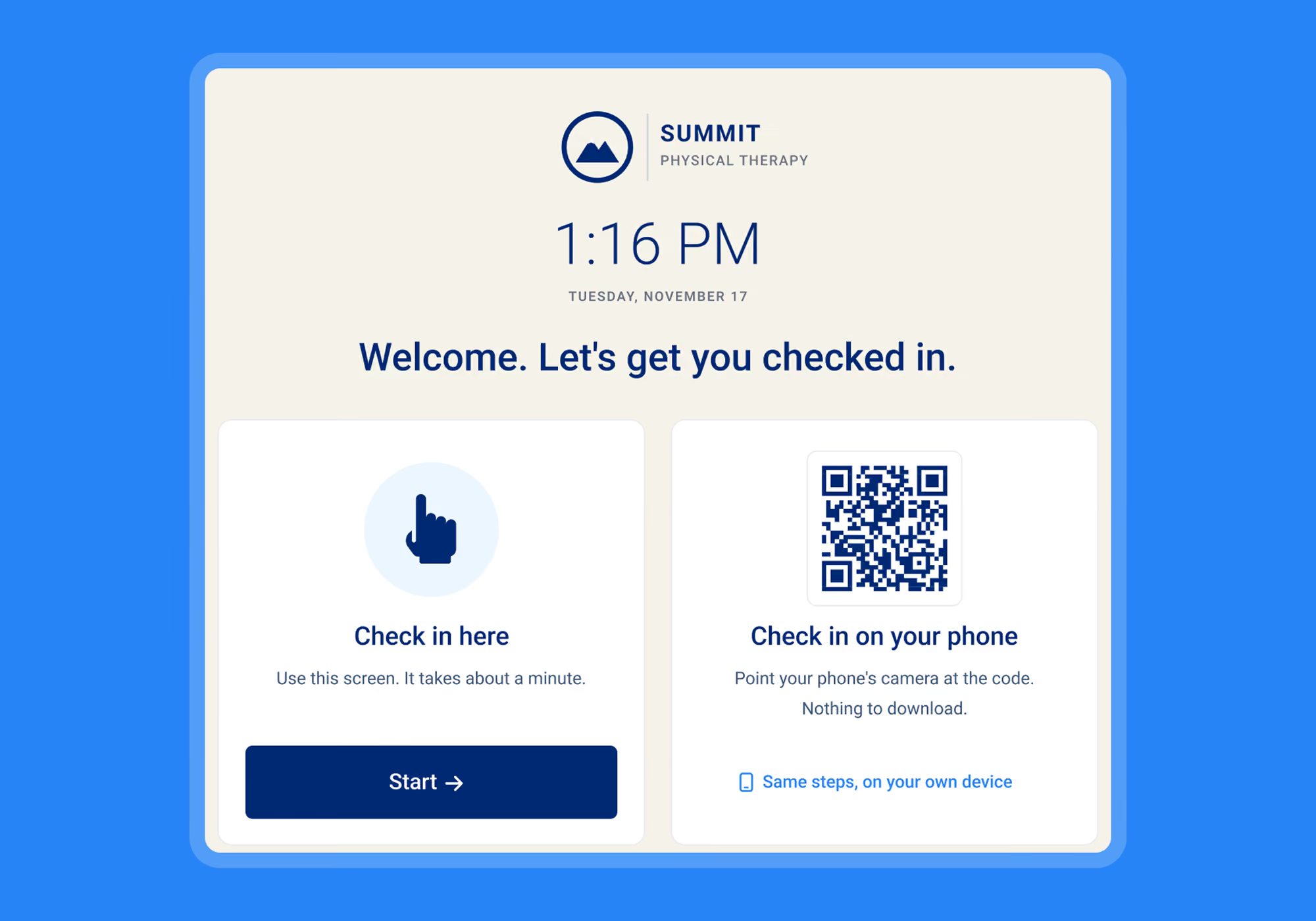
Patient Kiosk
Simplify the Check-in Process
Patients check in from a waiting room tablet or their own phone, then complete intake forms and pay their copay.
The Outcome
More patients prepared for care, with fewer delays and less administrative work.
What this means for your practice
Simple digital intake and communication make it easier to start care.
Forms, consents, payments, and required information are completed before the visit.
Upfront collections help reduce outstanding patient balances and accelerate cash.
Automation and self-service reduce manual follow-up for your team.
Stage 3
Before Care Begins
Eligibility & Authorization Management
Know what’s covered. Protect every visit.
Verify coverage, identify authorization needs, and track visit limits to reduce denials.
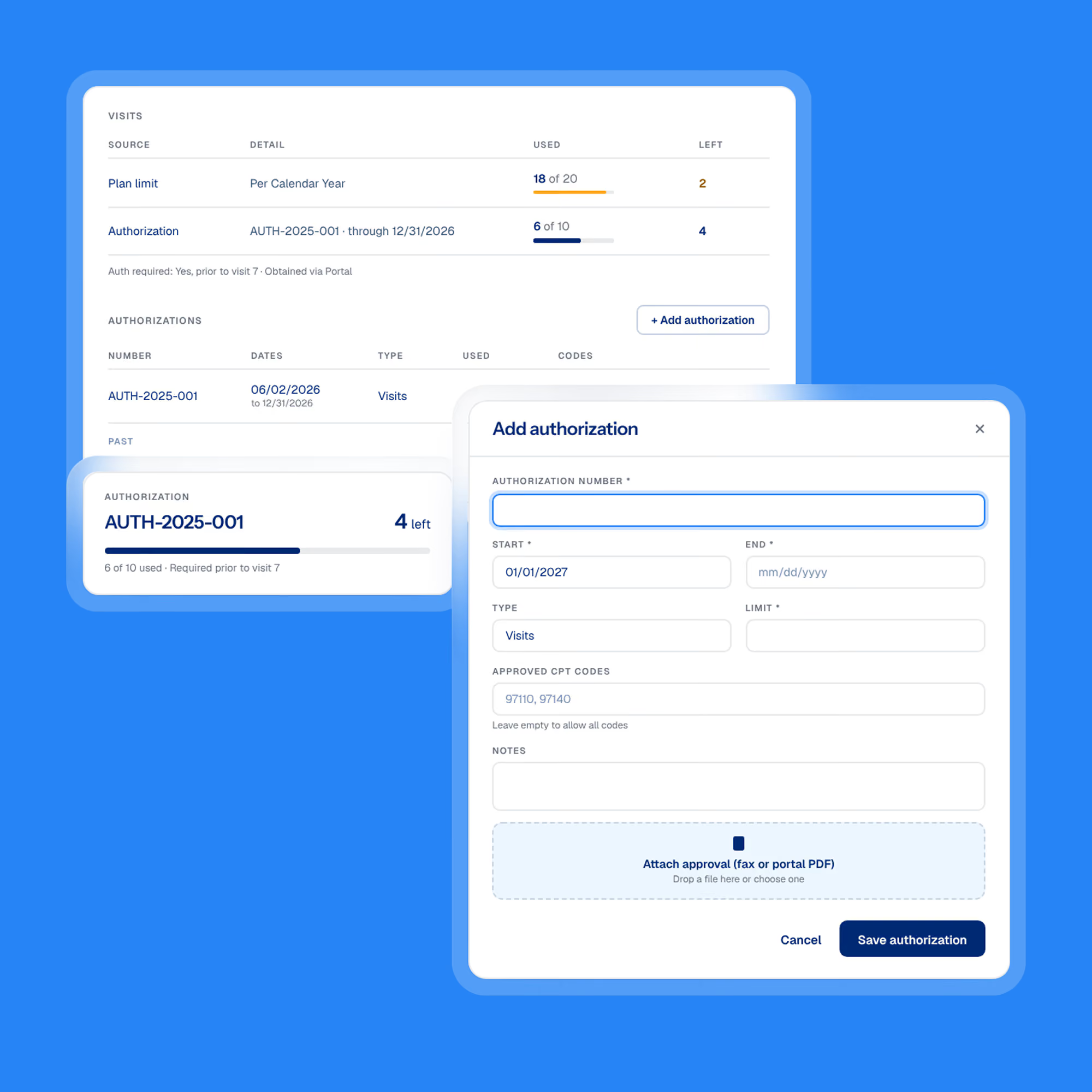
Confirm active coverage, effective dates, patient responsibility, visit limits, and available benefit details in real time.
Flag when authorization is required and surface payer-specific requirements before care begins.
Track authorizations, approved visits and units, effective dates, and supporting documentation in one place.
Monitor remaining authorized visits and expiration dates against scheduled care to identify risks before authorization lapses.
Maintain visibility into primary, secondary, and tertiary insurance coverage, including coordination-of-benefits information.
The Outcome
More covered visits. Fewer authorization-related denials. Less preventable revenue leakage.
What this means for your practice
Identify eligibility and authorization issues before they create downstream claim problems.
Visit and expiration monitoring help prevent services from being delivered outside approved authorization limits.
Automation and centralized visibility reduce manual verification, tracking, and authorization follow-up.
Accurate benefits and patient responsibility information help reduce unexpected costs and confusion.
Stage 4
Getting Visit Ready
Scheduling & Visit Readiness
Schedule with confidence. Keep every visit on track.
Match the right provider, time, and payer requirements before care begins.
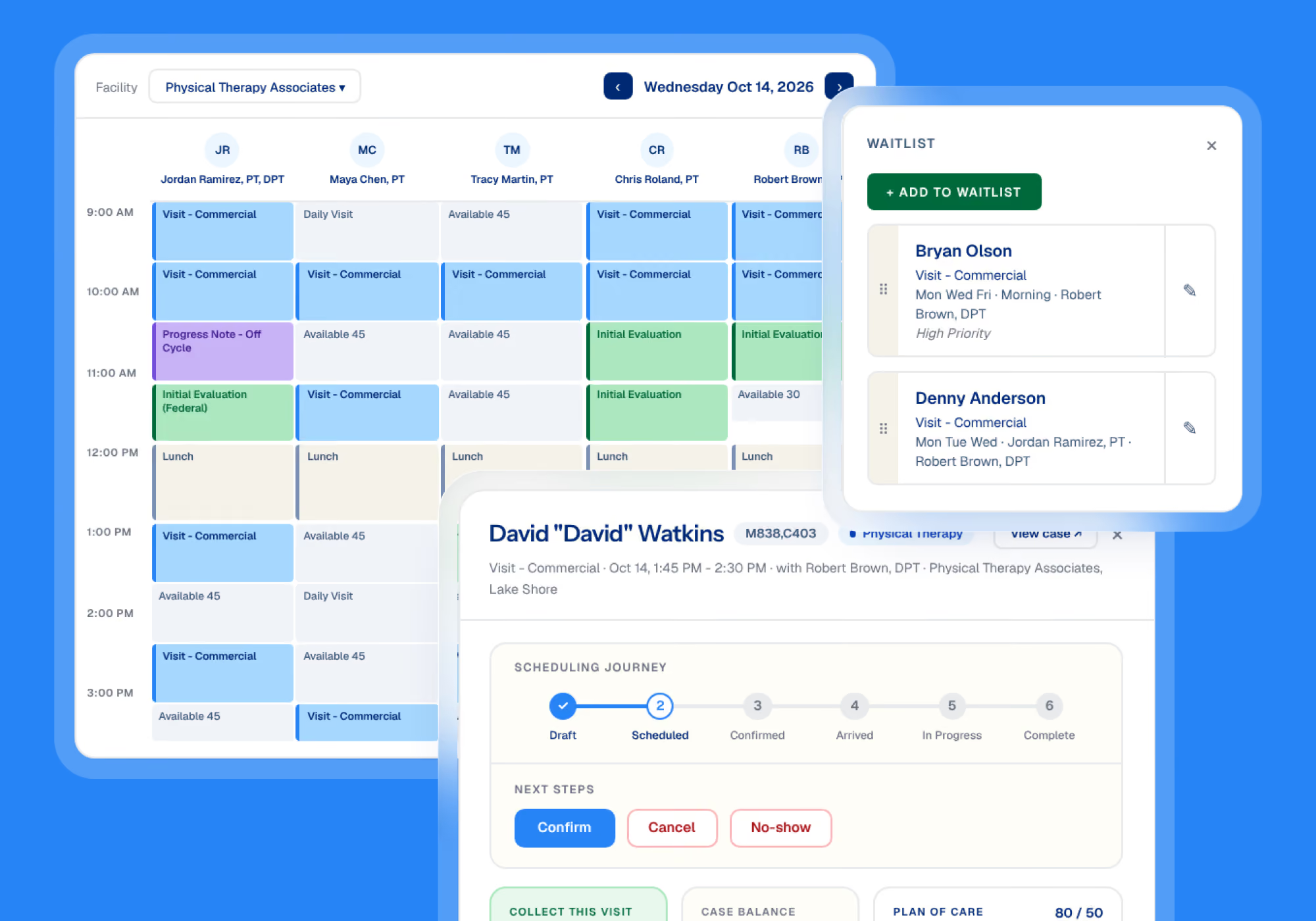
Smart Scheduling
The right patient with the right provider
Match patients with the appropriate provider, location, appointment type, and available time.
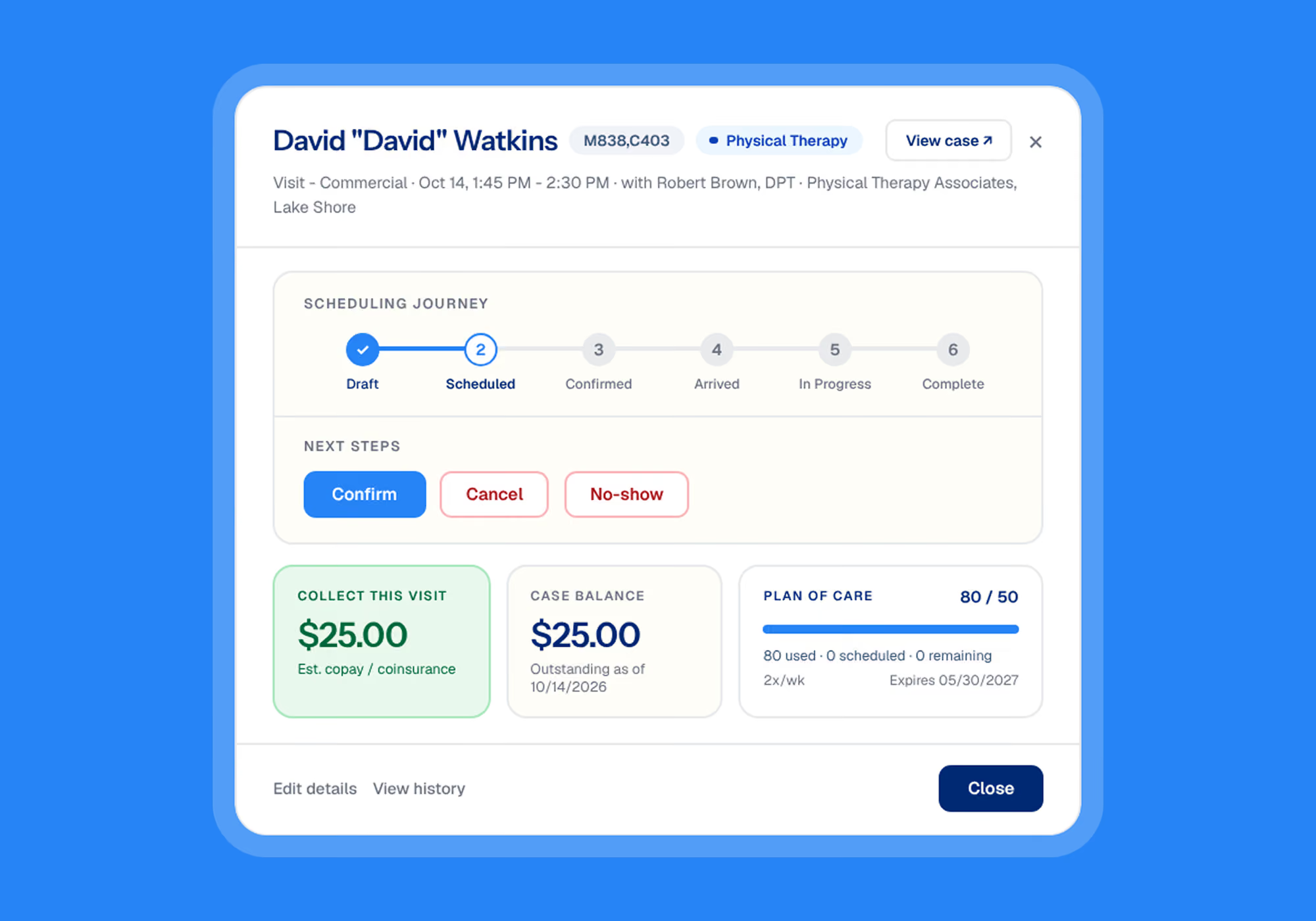
Visit Readiness
Understand what needs attention before the appointment
Surface coverage, authorization, credentialing, and other readiness concerns before the scheduled visit.
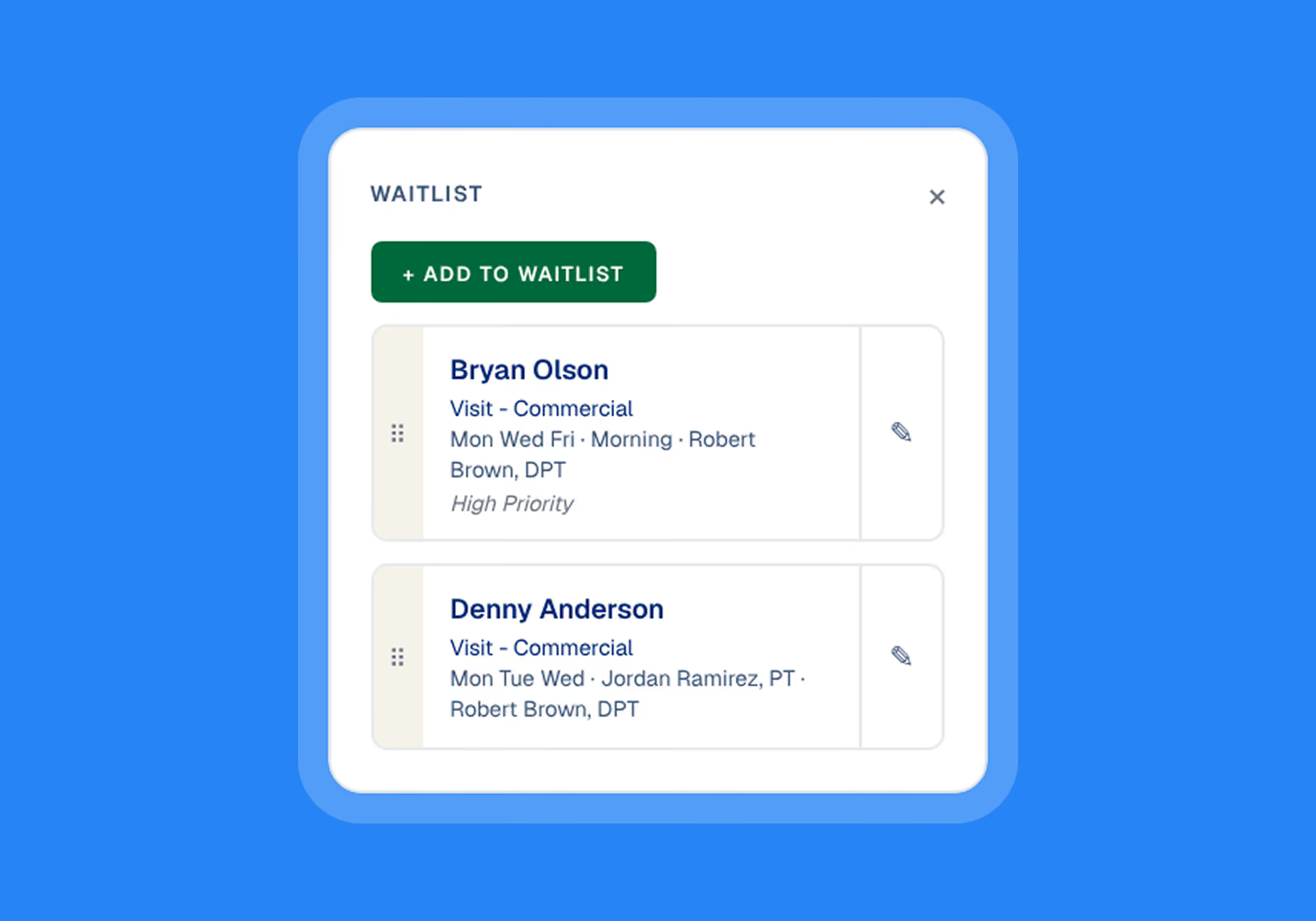
Waitlist Management
Fill OPenings Faster
Track patients waiting for a cancellation along with their preferred provider, times and days. When a slot opens, move them straight onto the schedule.
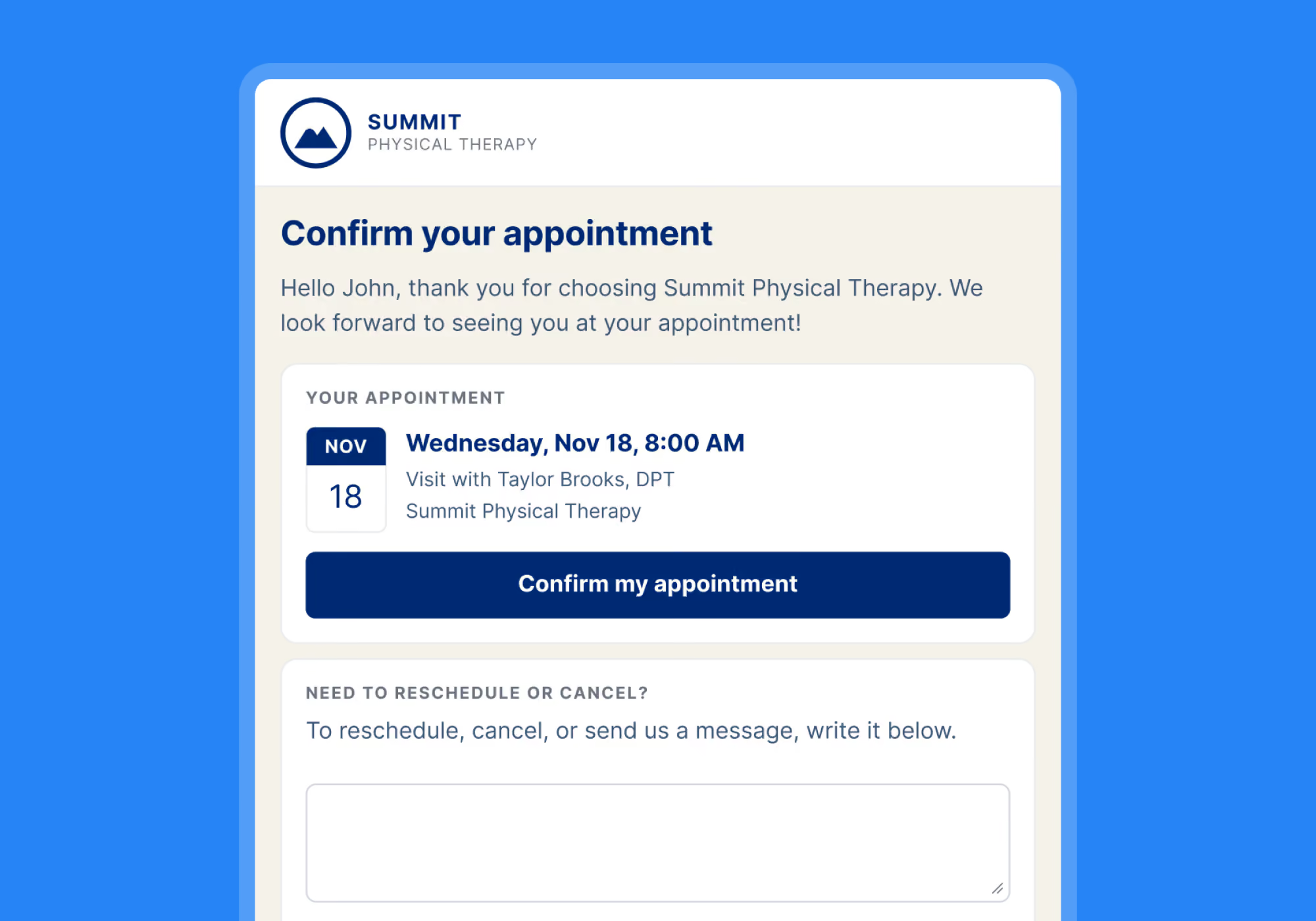
Patient Reminders & Confirmations
Keep appointments on track
Automated text and email reminders and confirmations help patients stay informed and reduce missed visits.
The Outcome
The right provider, the right visit length, and payer requirements aligned before care begins.
What this means for your practice
Automated reminders and confirmations help patients stay informed and keep appointments.
Align provider availability, patient demand, and visit requirements to make better use of clinical capacity.
Centralized readiness visibility reduces manual checks, last-minute corrections, and scheduling friction.
Identify payer and visit-readiness issues before they lead to avoidable cancellations, noncovered services, or reimbursement problems.
Stage 5
During & After the Visit
Clinical Documentation & Charge Integrity
Document clearly. Bill accurately.
Connect documentation, coding, and payer rules to protect reimbursement.
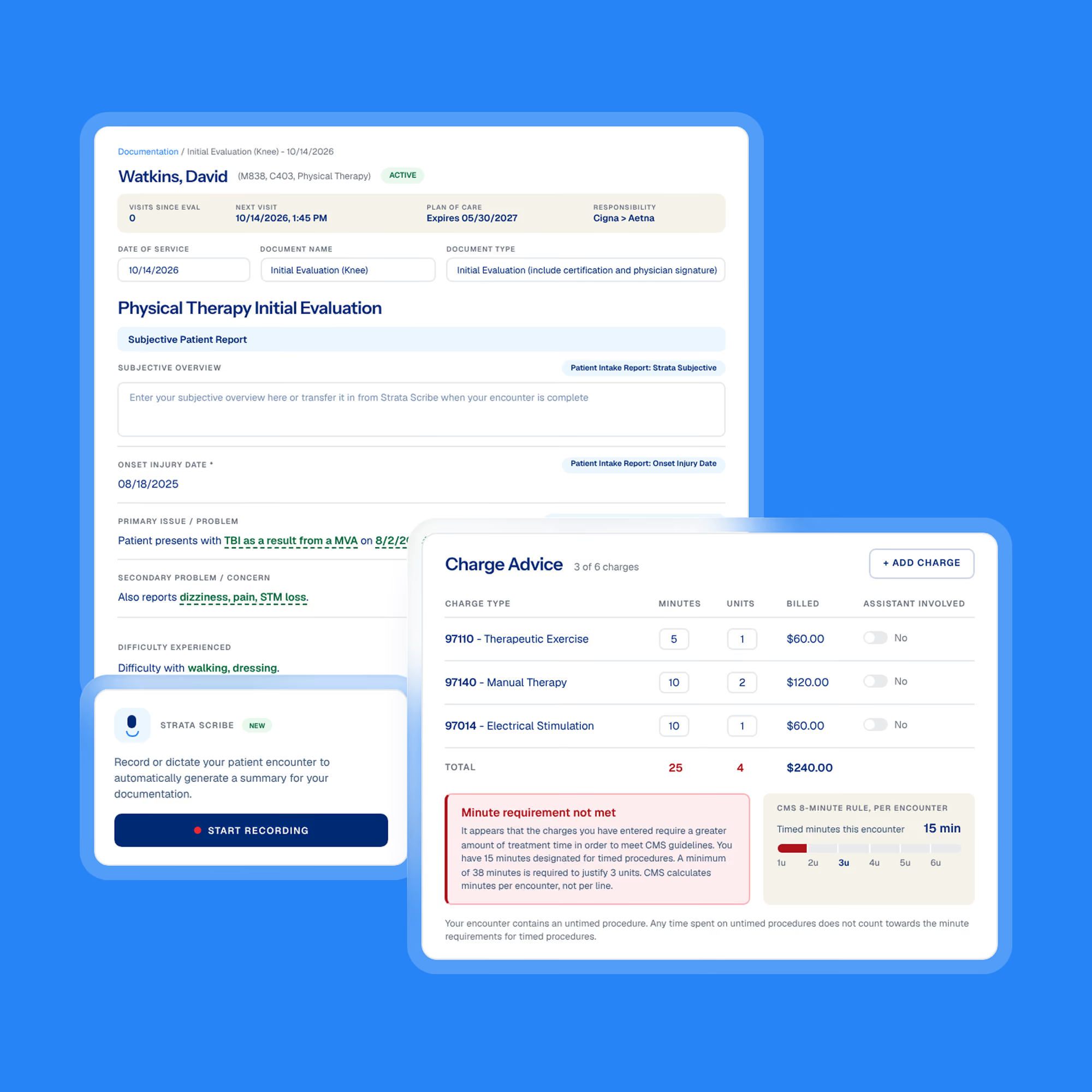
Help clinicians document efficiently with AI-assisted workflows and specialty-specific templates designed around the care they deliver.
Validate that documentation supports the CPT codes, units, and billing requirements associated with each visit.
Identify coding conflicts, timed-code issues, nonreimbursable services, and payer-specific billing requirements before charges advance to claims processing.
Flag or hold charges when required documentation, authorization, credentialing, or other billing requirements remain incomplete.
The Outcome
Complete documentation and cleaner, compliant charges before billing begins.
What this means for your practice
Intelligent tools improve documentation efficiency and help reduce clinician administrative burden.
Connected validation identifies coding and billing issues before charges move downstream.
Documentation and charge safeguards help reduce avoidable claim rejections and payer denials.
Accurate documentation and compliant charges help protect reimbursement and reduce preventable revenue leakage.
Stage 6
From Visit to Claim
Claims Management & Payer Delivery
Deliver cleaner claims and accelerate reimbursement.
Our RCM team manages each claim through payer delivery to identify exceptions early and keep reimbursement moving.
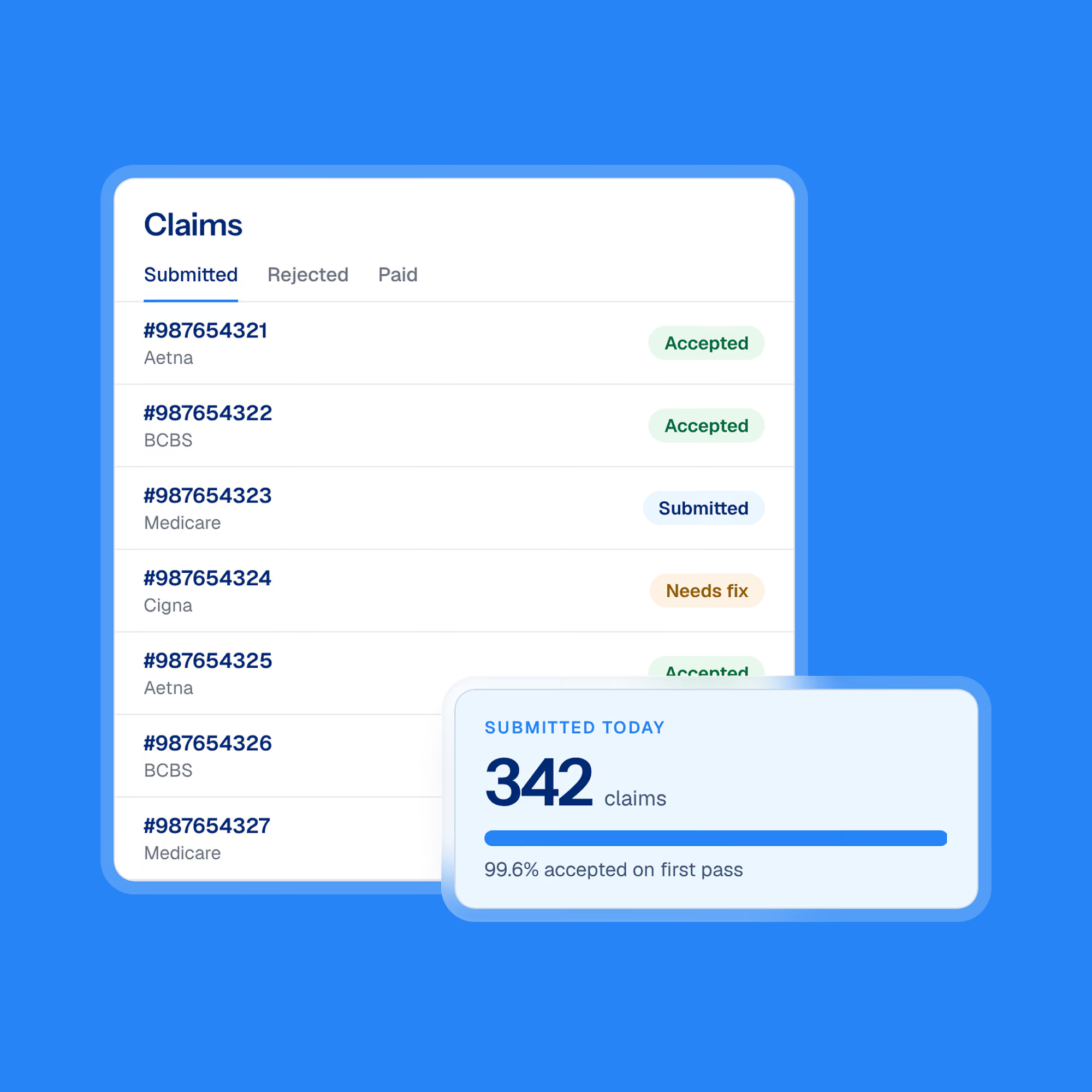
StrataPT applies billing rules and payer-specific requirements to identify errors and prevent avoidable rejections, denials, and rework before submission.
Our RCM team manages the appropriate billing modifiers based on payer requirements and visit details, eliminating the need for your practice team to manage modifiers manually.
Our RCM team manages electronic claim submission daily, helping avoid unnecessary batching delays and keeping reimbursement moving.
Claims are routed through the appropriate payer and clearinghouse workflows, including primary, secondary, and tertiary billing.
StrataPT monitors claim delivery, payer acknowledgments, rejections, and claim status so issues can be identified and addressed quickly.
The Outcome
Cleaner claims, timely payer delivery, and fewer avoidable submission issues.
What this means for your practice
Payer-specific validation and accurate claim preparation help more claims pass initial submission checks.
Daily electronic delivery and fewer avoidable errors help reduce delays in the reimbursement process.
Know where claims stand from submission through payer acknowledgment, with clearer visibility into issues requiring attention.
Our RCM Experts manage claim preparation, modifier requirements, submission, and follow-up on delivery issues so your practice team can stay focused on patient care.
Stage 7
Following Up on Revenue
Payer Denial & A/R Management
Resolve issues faster and keep revenue moving.
Our RCM team monitors outstanding claims, works directly with payers, resolves denials, files appeals and follows through to payment is received.
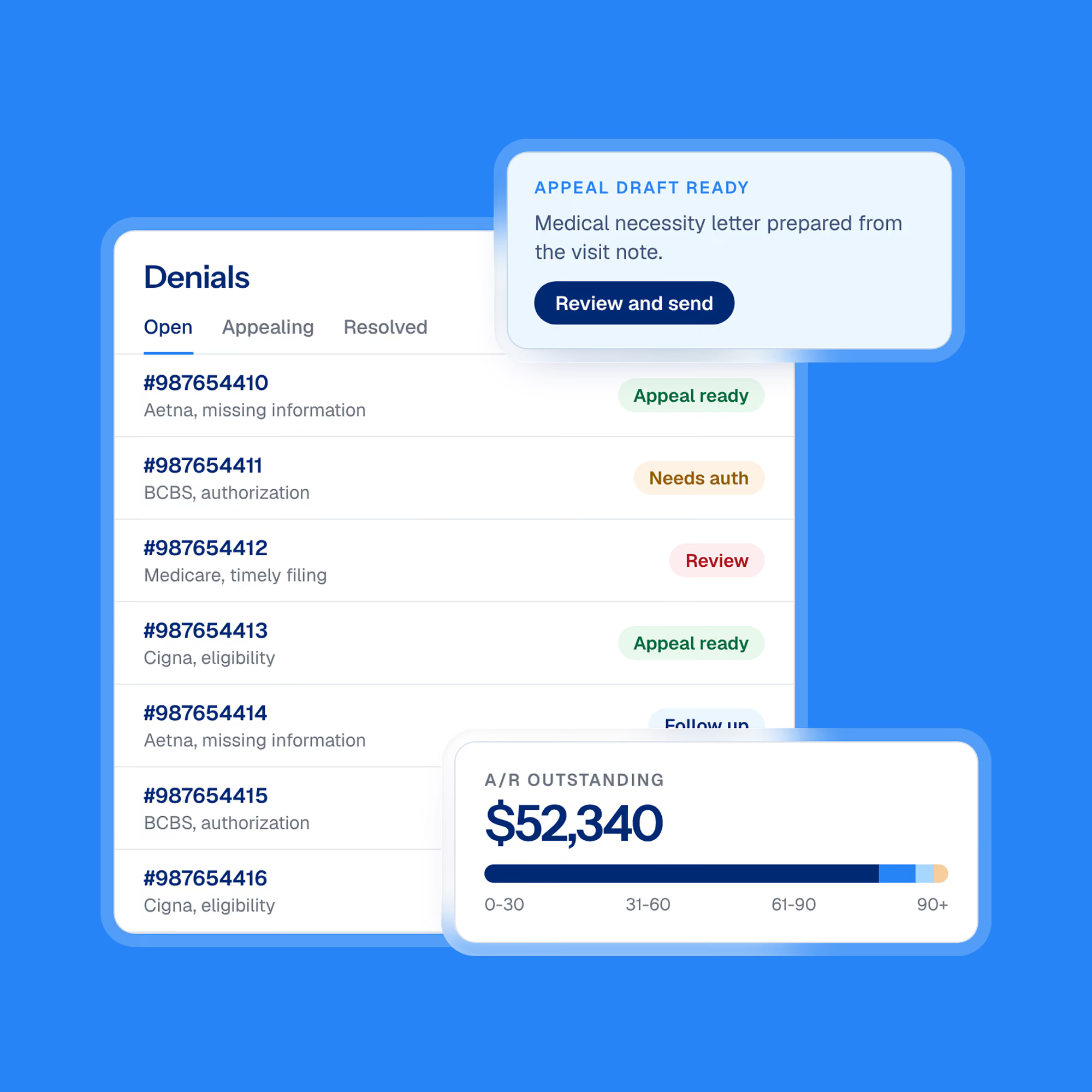
StrataPT analyzes denial trends and root causes, using those insights to help prevent the same issues from recurring across your revenue cycle.
Our RCM team systematically follows up with payers, resolves outstanding issues, and works to accelerate reimbursement.
Our RCM team prepares and manages appeals, reconsiderations, and supporting documentation to pursue reimbursement on eligible claims.
Claim aging, outstanding balances, payer behavior, and claim status help prioritize follow-up and identify revenue requiring attention.
Stalled and high-risk claims are identified, escalated, and actively worked toward resolution.
The Outcome
More outstanding revenue recovered, less aging A/R, and fewer recurring denials.
What this means for your practice
Prioritized payer follow-up helps reduce outstanding balances and prevent claims from sitting unresolved.
Denied and stalled claims are actively worked to pursue reimbursement that might otherwise be overlooked.
Root-cause intelligence helps identify recurring problems and drive improvements earlier in the revenue cycle.
Our RCM team manages payer follow-up, appeals, and escalations so your practice team doesn’t have to.
Stage 8
Accounting for Every Dollar
Payment Reconciliation & Financial Close-Out
Make sure every dollar is accounted for.
Our RCM team manages payment posting and reconciliation, identifies underpayments, and resolves discrepancies so revenue is accurately accounted for.
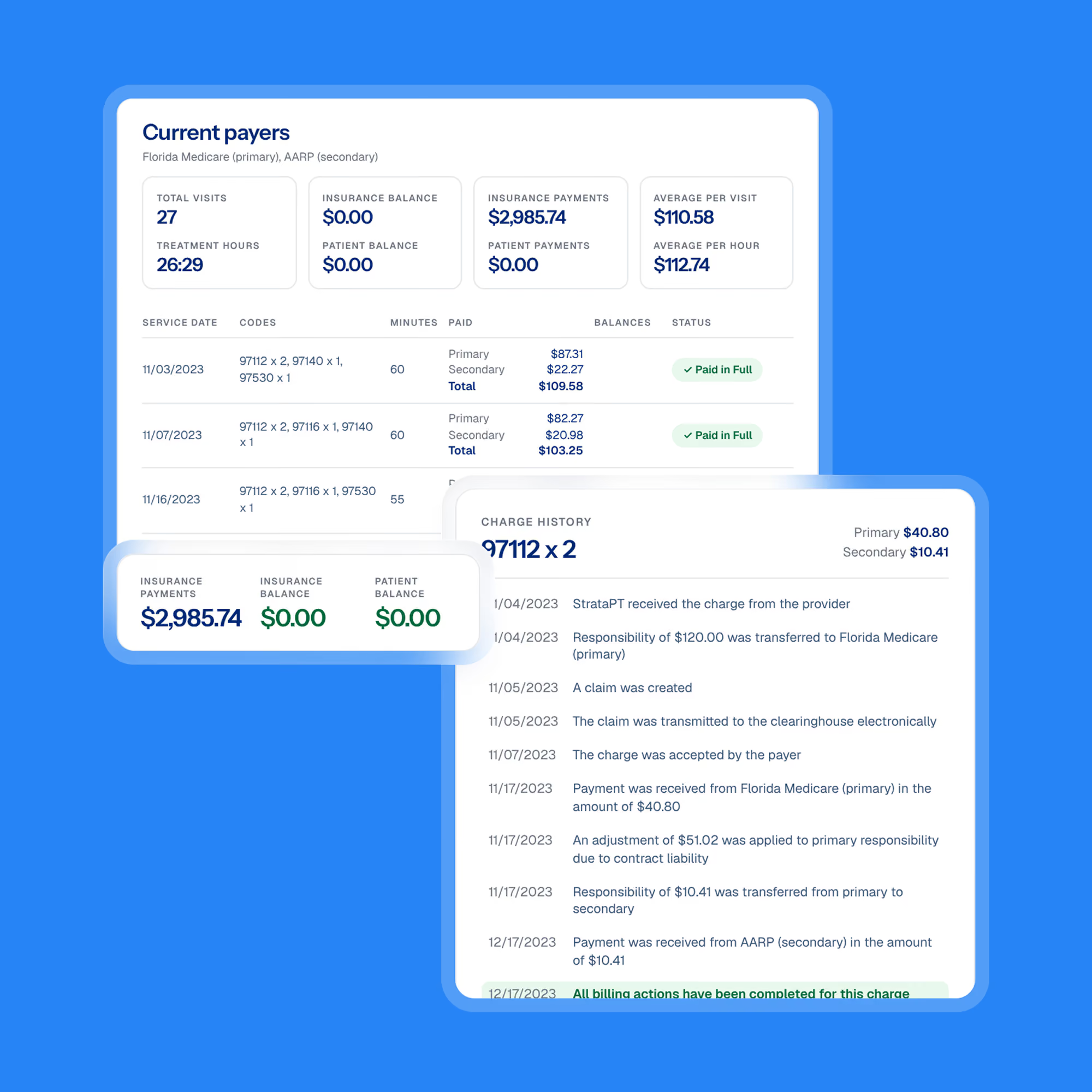
Our RCM team manages the posting and reconciliation of ERA, EFT, check, and patient payments, matching transactions to the appropriate claims and patient accounts.
StrataPT identifies underpayments and contractual variances, then investigates and works discrepancies to pursue reimbursement your practice is owed.
Automated ERA retrieval, parsing, and matching help accelerate payment processing, improve accuracy, and reduce manual work.
Maintain accurate patient balances, account for payments and adjustments, and generate statements to support timely patient collections.
The Outcome
Accurate payment posting, actively managed discrepancies, and clearer visibility into the revenue your practice earns and collects.
What this means for your practice
Payments are matched and posted accurately across claims and patient accounts.
Underpayments and contractual variances are identified, investigated, and worked rather than overlooked.
Accurate payment posting and reconciliation provide a more reliable picture of collections, outstanding balances, and revenue performance.
Timely posting, patient balance management, and reimbursement recovery help keep cash moving into the practice.
Stage 9
Understanding Performance
KPI Reporting & Performance Insights
Turn your revenue data into clearer decisions.
Bring financial, operational, and clinical performance into one connected view with real-time visibility into the KPIs that matter most.
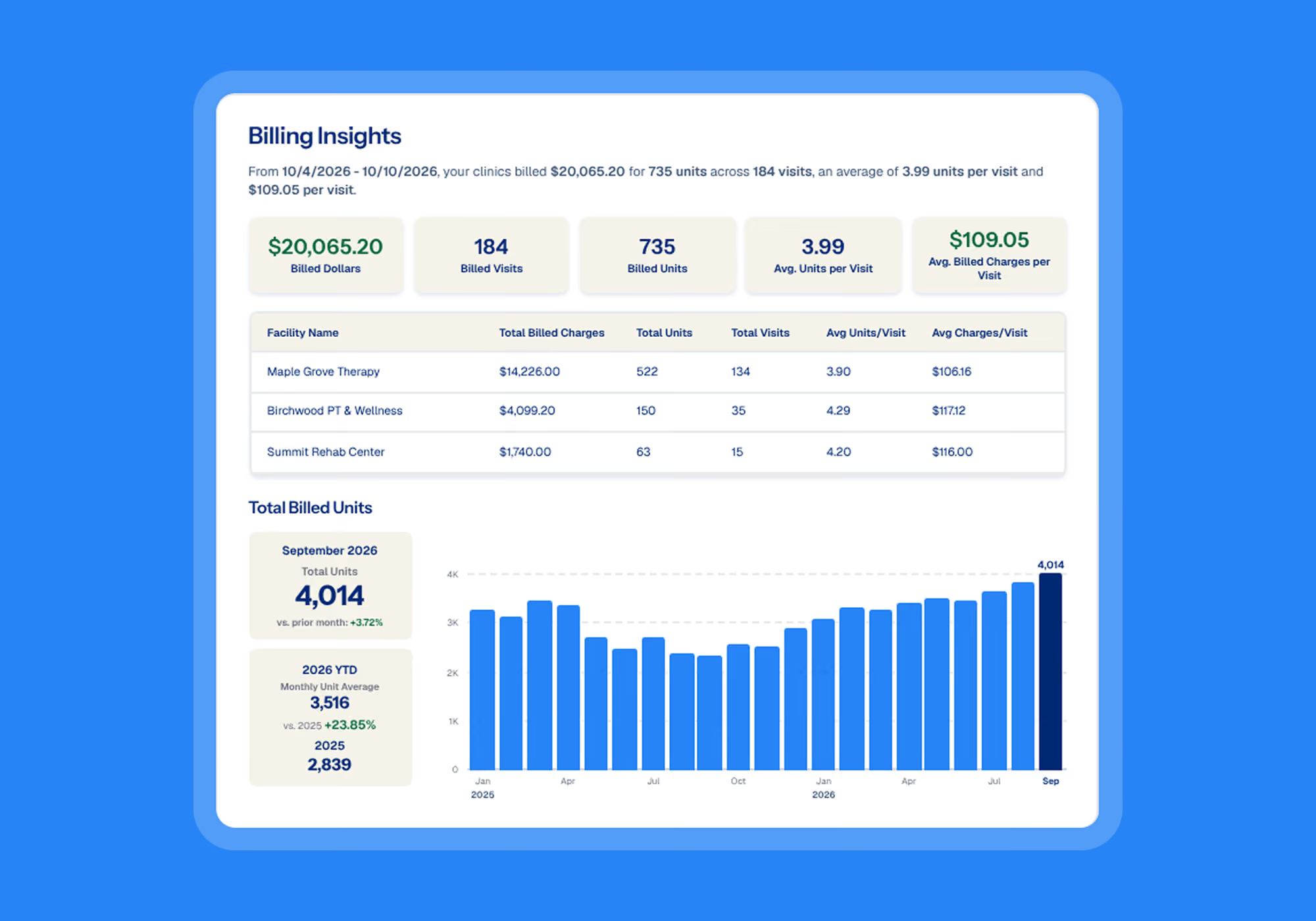
Real-Time KPI Dashboards
See how your practice is performing
Track collections, visits, reimbursement, A/R, denials, productivity, and other key financial and operational metrics in one place.
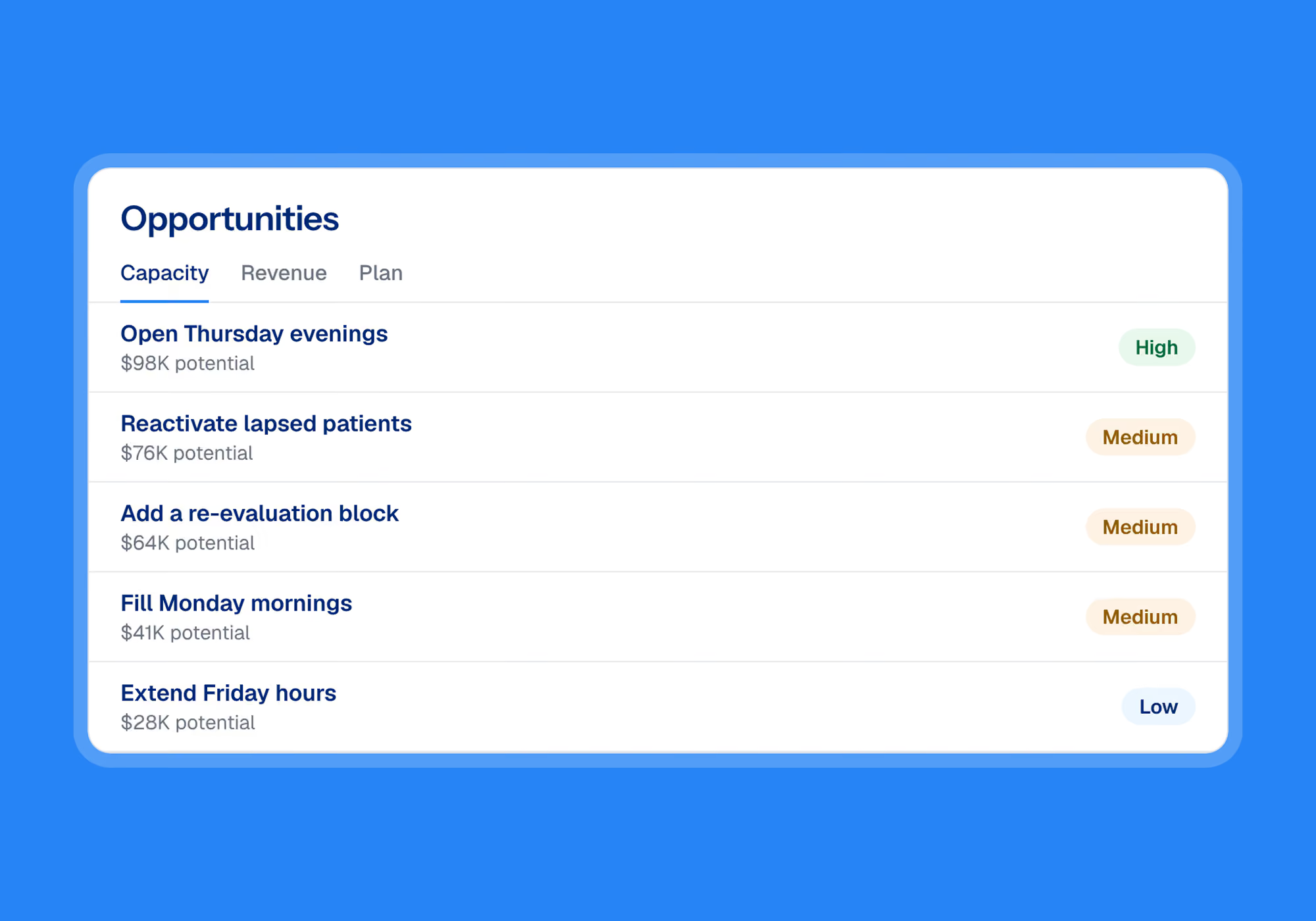
Trends & Benchmarking
Understand what’s changing over time
Monitor performance trends and compare results across providers, locations, payers, and available benchmarks to identify opportunities for improvement.
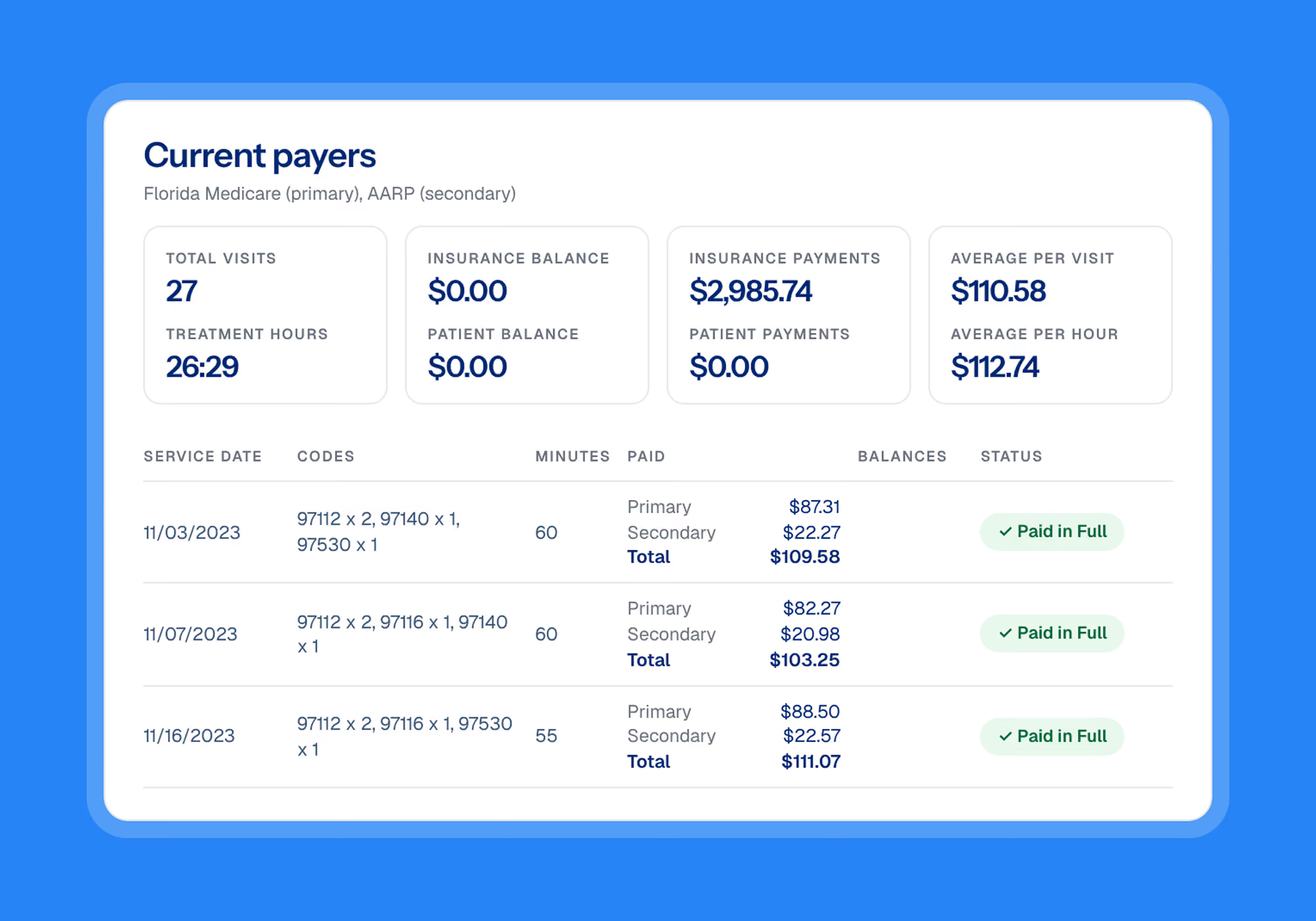
Payer & Provider Performance
Find the details behind the numbers
Analyze reimbursement, utilization, denial trends, productivity, and other performance measures by payer, provider, and location.
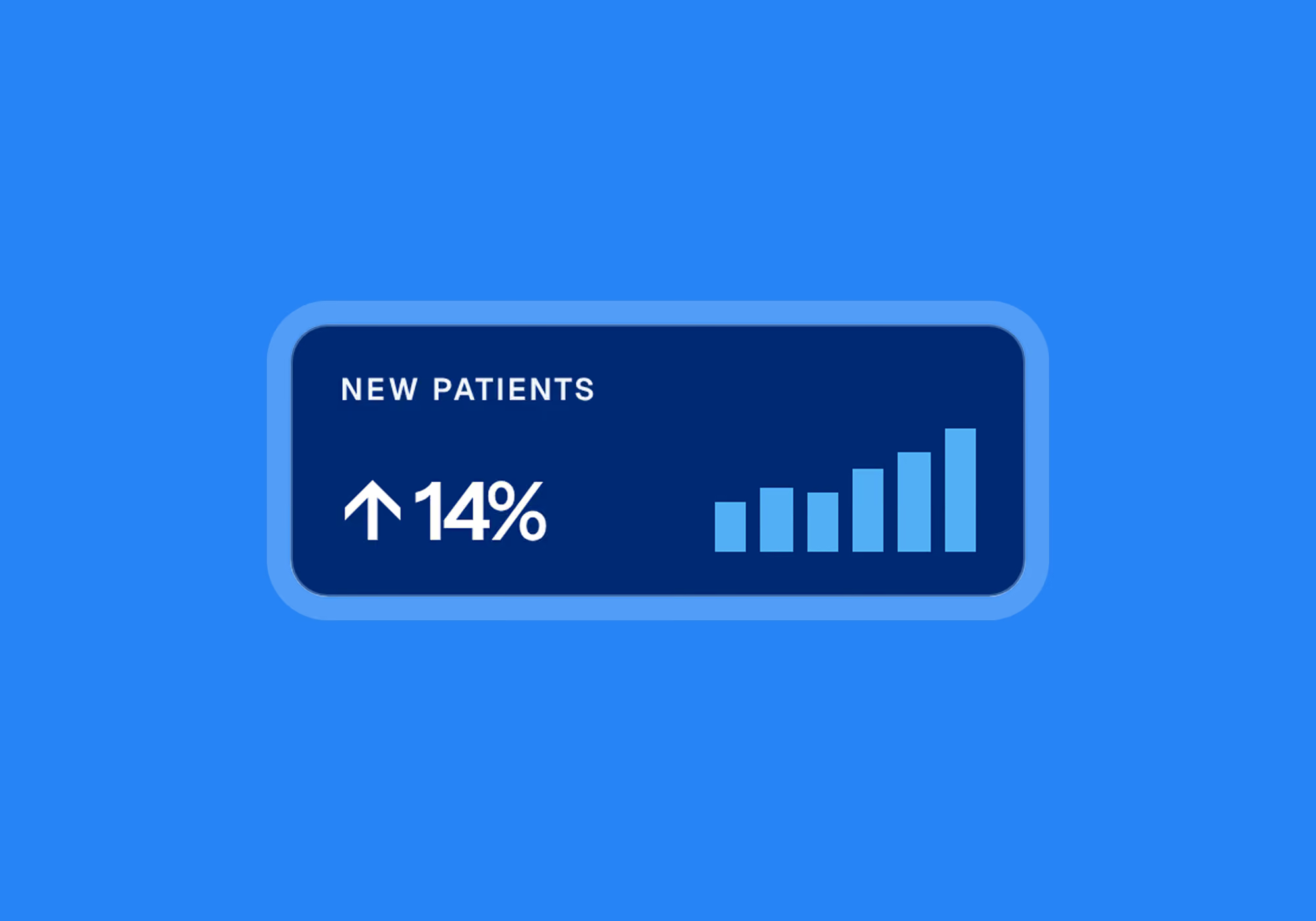
Custom Reporting & Alerts
Focus on the metrics that matter to your practice
Build reports around your priorities and surface performance changes or issues that need attention.
The Outcome
Clear visibility into what’s working, where performance is slipping, and where the greatest opportunities exist.
What this means for your practice
See financial, operational, and clinical performance across the revenue cycle in one connected view.
Identify emerging trends, revenue leakage, and performance issues before they become larger problems.
Use accurate, connected data to prioritize where your team should focus.
Track performance against goals, benchmarks, and opportunities over time.
Stage 10
Turning Insights Into Action
Performance Optimization & Growth
Smoother operations. Stronger margins. Sustainable growth.
Our Advisor Team and RCM Experts turn performance insights into action, helping improve operations, protect margins, and uncover opportunities for growth.
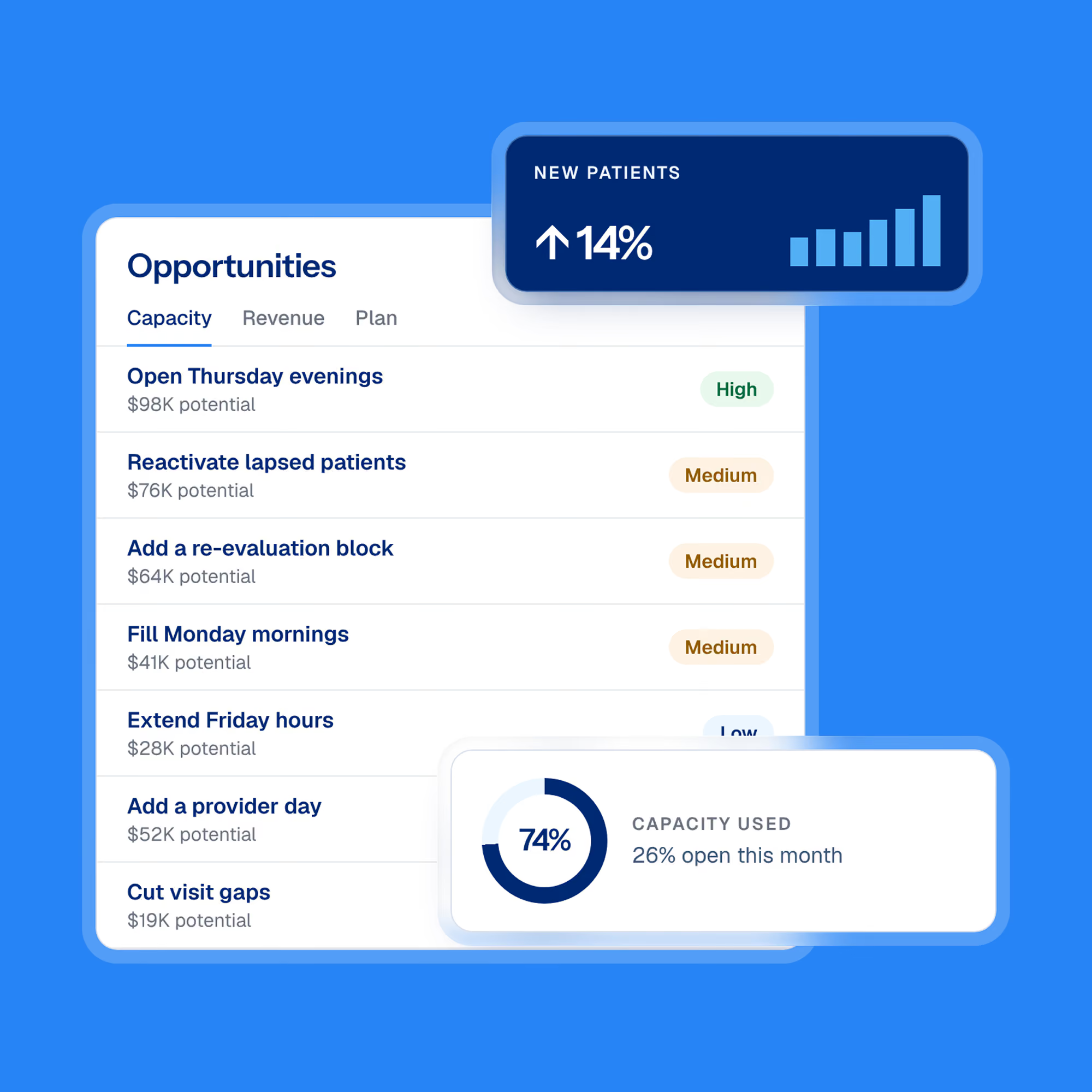
Regular reviews with our Advisor Team bring goals, results, challenges, and opportunities together to identify priorities and keep your practice moving forward.
Identify revenue leakage, reimbursement trends, and operational changes that can improve collections, reduce cost to collect, and protect practice margins.
Identify recurring friction, inefficiencies, and workflow opportunities across your revenue cycle, then work together to implement improvements.
Use reimbursement, utilization, and performance data to identify opportunities across payers, providers, locations, and service lines.
The Outcome
A stronger practice with smoother operations, healthier margins, and a clearer path to sustainable growth.
The StrataPT Performance Loop
Measure
Understand what’s happening across your revenue cycle.
Learn
Identify root causes, trends, and opportunities.
Optimize
Prioritize and implement improvements.
Improve
Evaluate the impact on operations and financial performance.
Measure Again
Keep learning, adjusting, and improving as your practice evolves.
Trusted by Independent Therapy Practices Nationwide
Hear from practice owners and teams using StrataPT to improve operations, strengthen collections, and create a better experience across the practice.

50% Cash Flow Increase
“Other clinics have asked us about StrataPT, and we recommend it without reservations. It’s been better for our cash flow and for our therapists.”
Christie Heath
Co-Founder, Blue Rock Therapy and Wellness

$40K Saved
“I no longer need to check billing on a regular basis — the platform handles everything behind the scenes.”
Tanner Crass
Owner, EnPhysio

$40K Saved
“StrataPT is like having an extra team member who not only handles our billing but all of our documentation, too.”
Terri Cassidy
Owner, Fitness to Drive

30% Reimbursement Increase
“Our reimbursement rate is so much better with StrataPT — I’ve even been able to hire more therapists with different specialties.”
Jeffrey Oliveira
Owner, Apex PT and Wellness
Maria R.
Completing intake forms from home